Repeat photography. Returning again and again to the same forest scene to trace its transformation offers a powerful lens for showcasing change following fires and disease, capturing the ongoing ecological cycle of life, death, and regeneration.
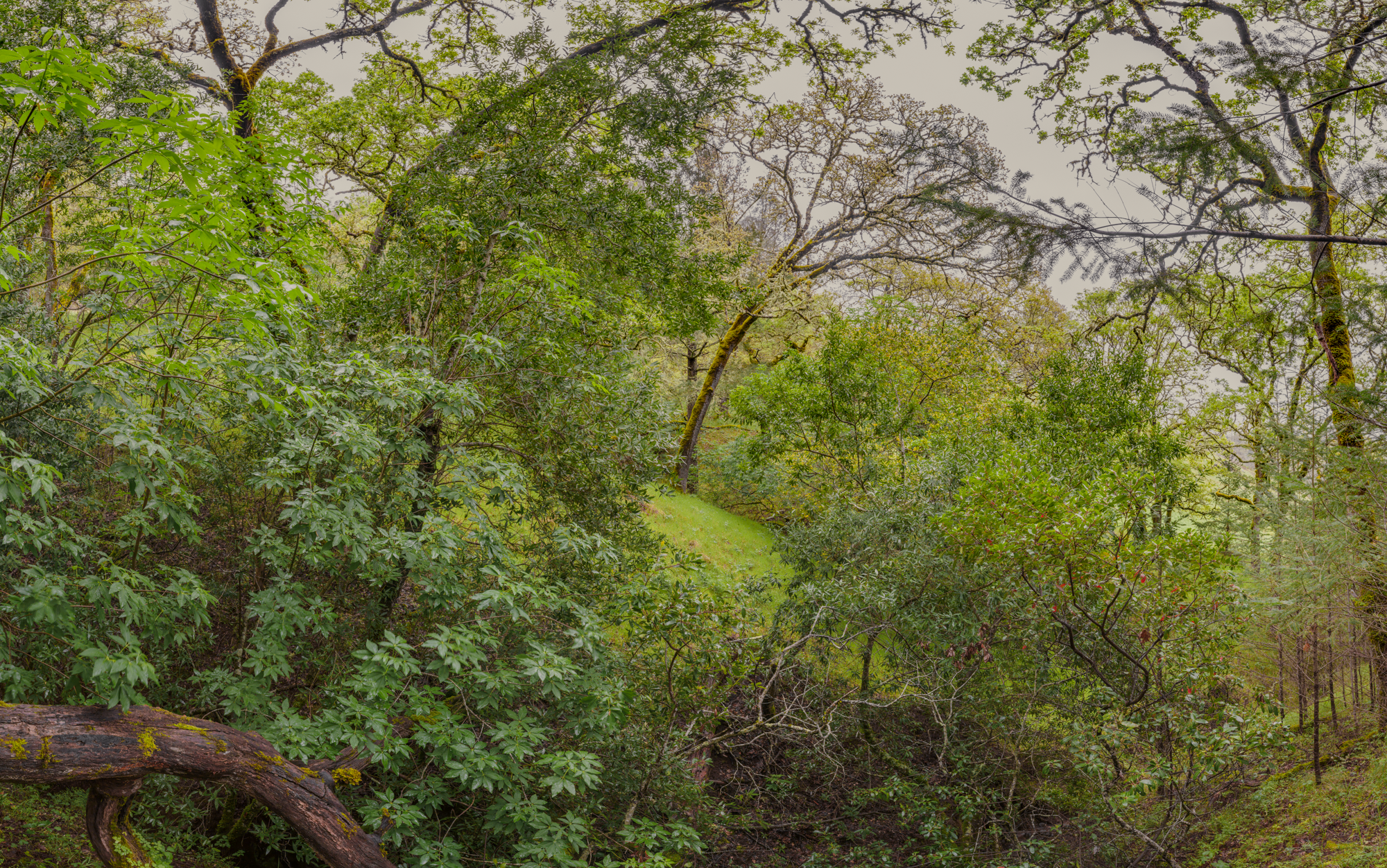
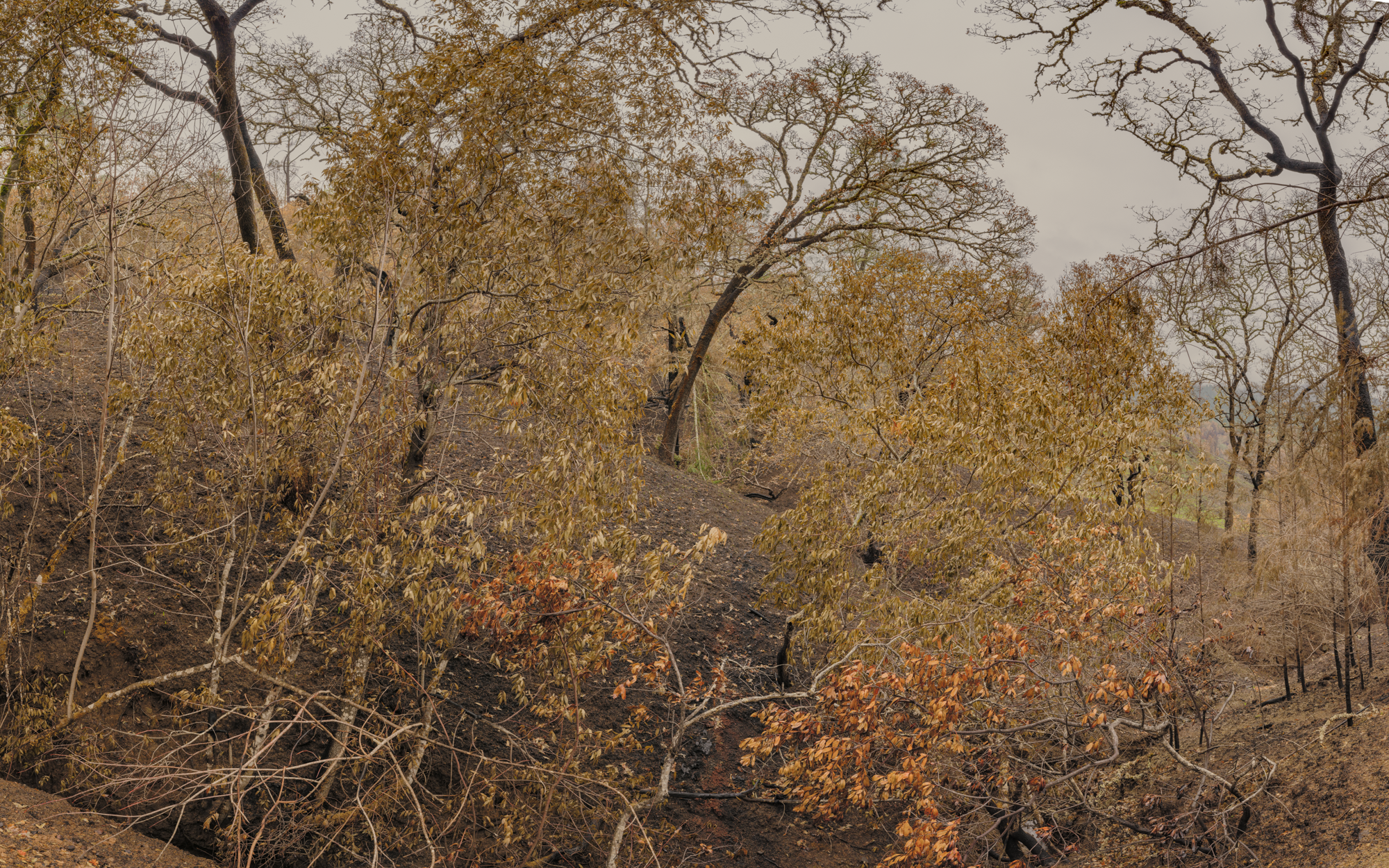
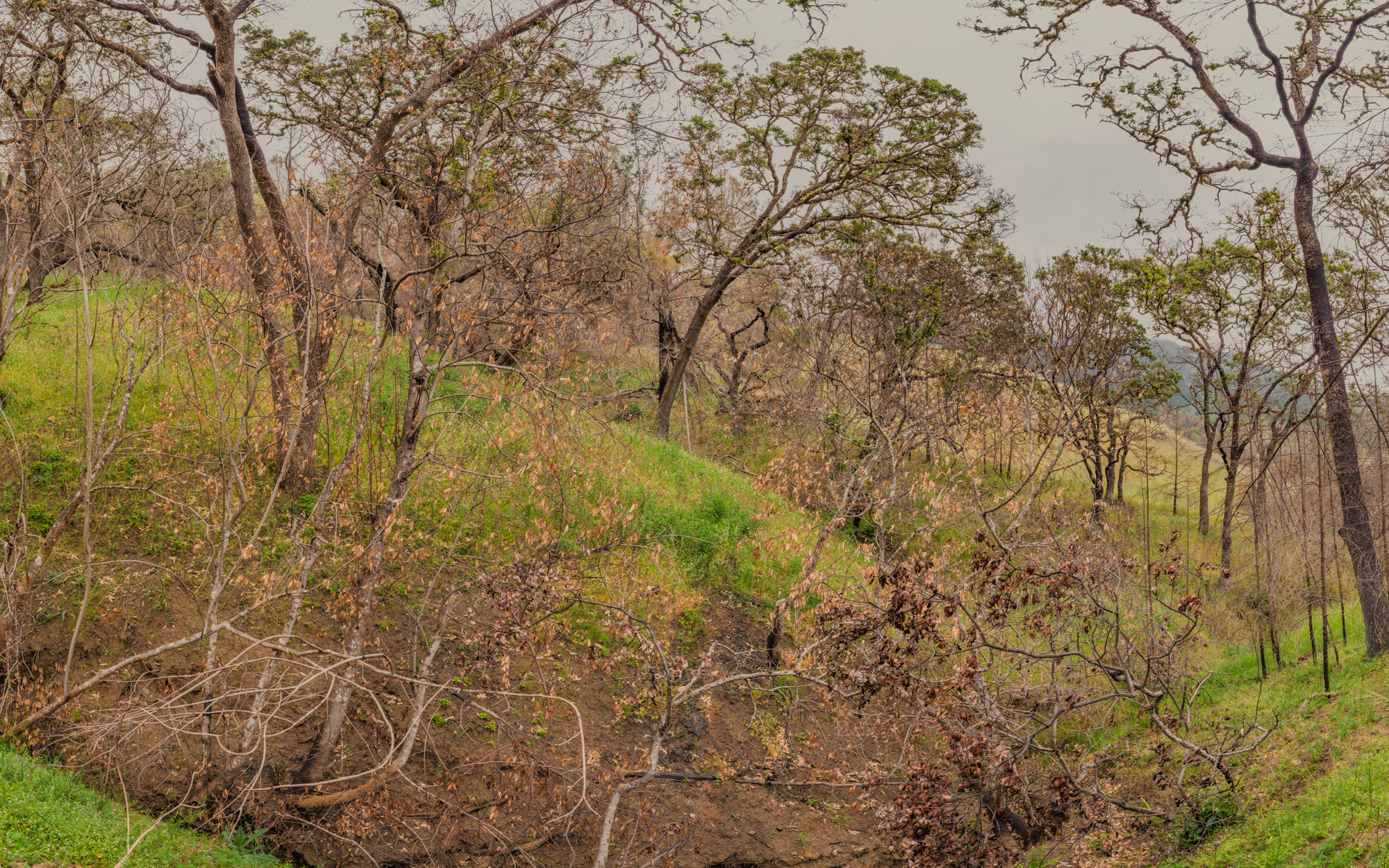
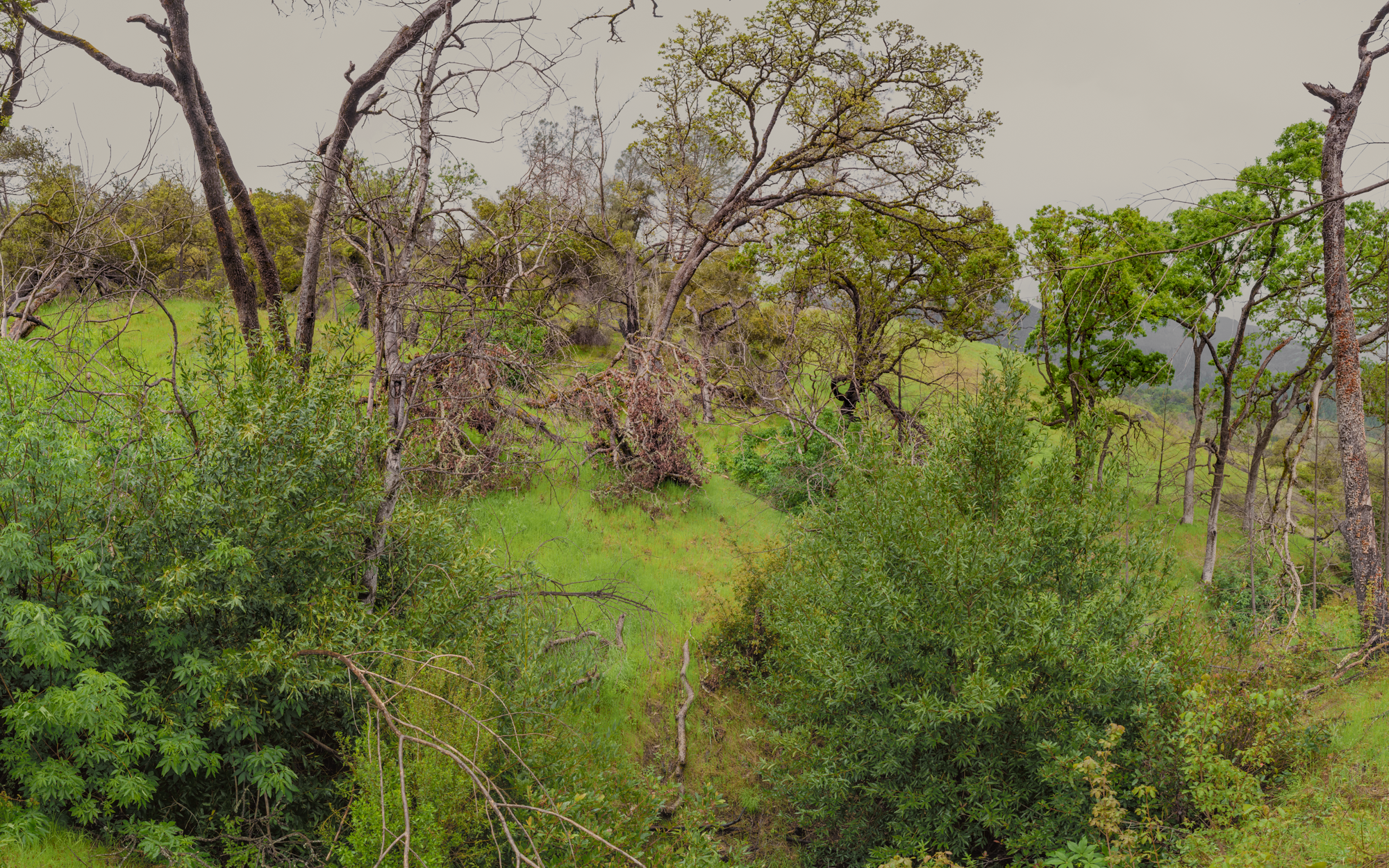
This method can also be employed to study the progression of the yearly seasons. The objective is to continue monitoring forest locations for many years to come. What follows are some examples of how repeat photography tells the stories of these processes. Taken three years apart, the next photos shows how Sudden Oak Death-affected the forest on the eastern slopes of Mt. St. Helena. Observe the rapid growth of the Douglas Fir tree in the foreground and fallen Tan Oak tree that split the previous decaying trunk. Unfortunately, the Tan Oaks will continue to decline, and in the next years, the forest will shift from a mixed composition to predominantly Douglas Fir, raising the risk of destructive forest fires.


In 2021, a swiftly moving fire wreaked havoc on Redwood Canyon within Sequoia National Park. This canyon is home to one of the most significant gatherings of sequoias across the Sierra Nevada region. The fire's ferocity was unprecedented, leading to the scorching of approximately 30% of the sequoias in the National Park. An inferno of such magnitude has not been witnessed for millennia, if not tens of thousands of years, and serves as a grave warning that the once fire-resistant giants of the Sierras are now in jeopardy.


These images show the conditions near the fire's outer edge, where the fate of these trees remains uncertain. The tree in the foreground has been impacted by root burn and is likely to fall during one of the upcoming winter wind events. Typically, fires climb only about 15 feet up these fire-resistant trunks but here, the charred trunks tower at over 50 feet, and most of the very oldest trees were entirely consumed by the flames. The hope for regenerating a Sequoia-dominant forest now lies in the trees' small cones, scattered across the ashes.


More Examples Of Fire Impact and Seasonal Change


